Resources.

Most pilot career advice is recycled, generic, or years out of date. Not this. Every guide and template here is built from current industry standards and from talking with the recruiters and chief pilots who do the actual hiring. We update them as the industry moves. Three guides. Five resume templates. All free.

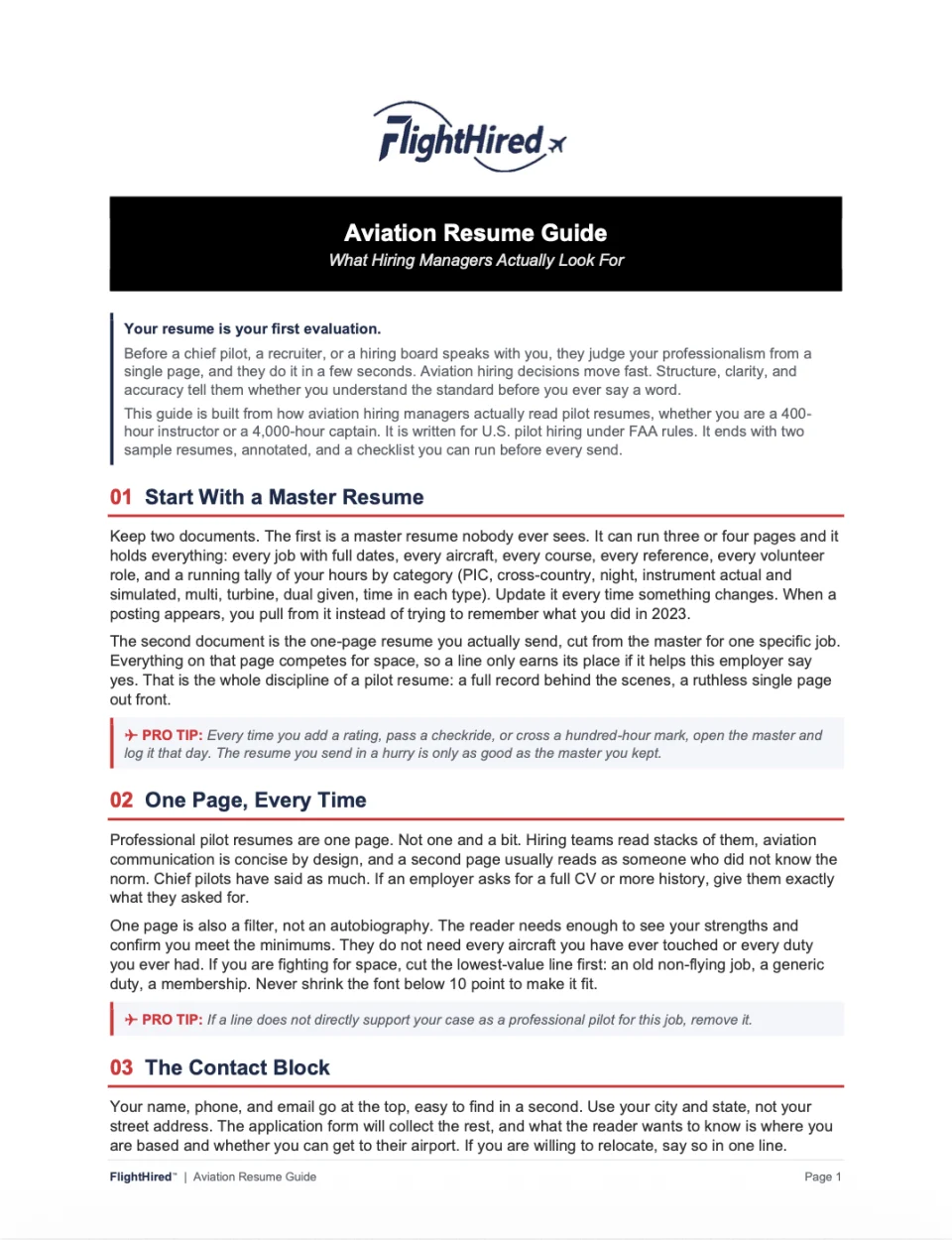
Aviation Resume Guide

Most applications are eliminated here. Make sure yours advances.

A chief pilot judges your professionalism from one page, in seconds, before you ever speak. This guide shows you what they read first.


Twelve sections. How to build a flight-time table that matches your logbook to the hour. When an objective line helps and when it reads as filler. Why “safely operated” is a wasted bullet. What to cut when the page runs long.


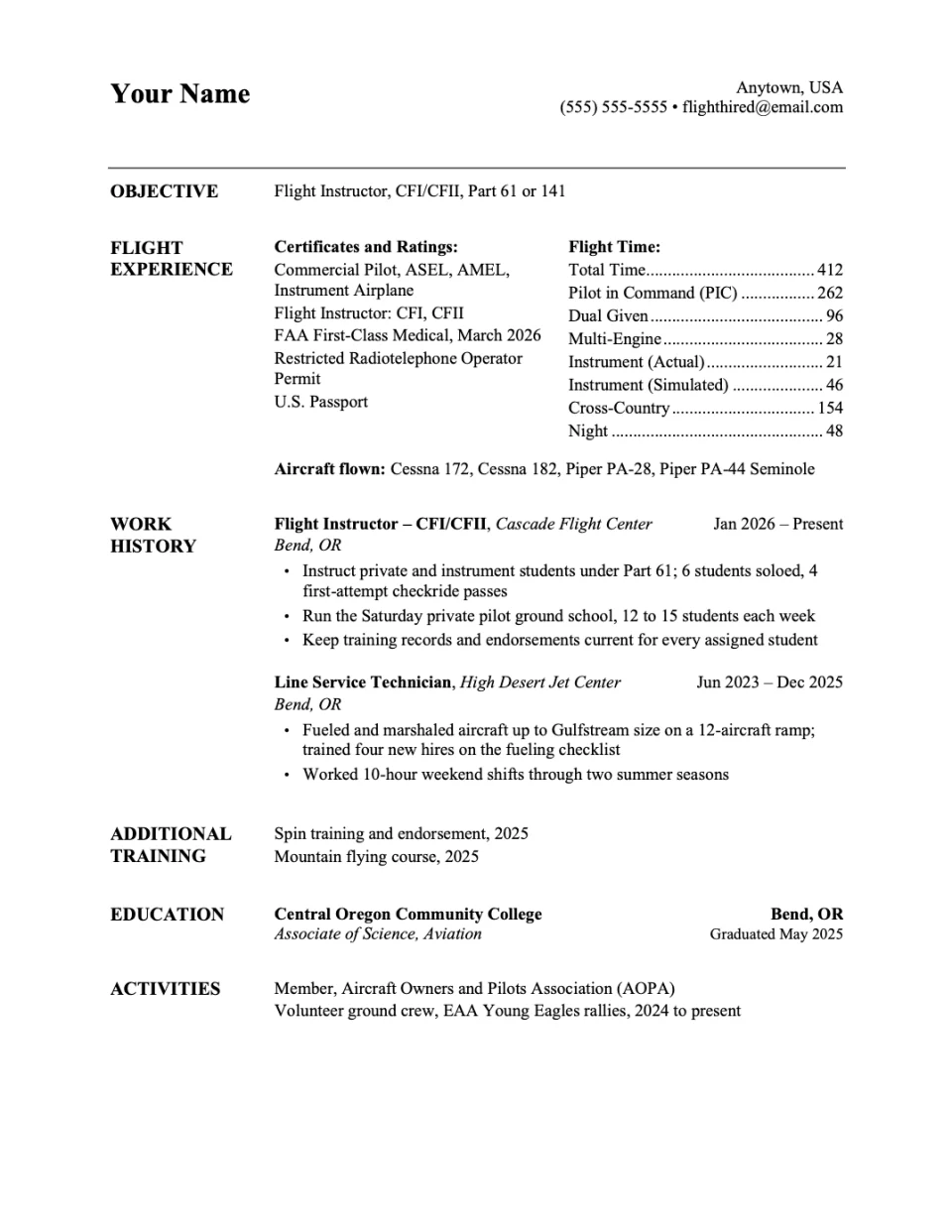
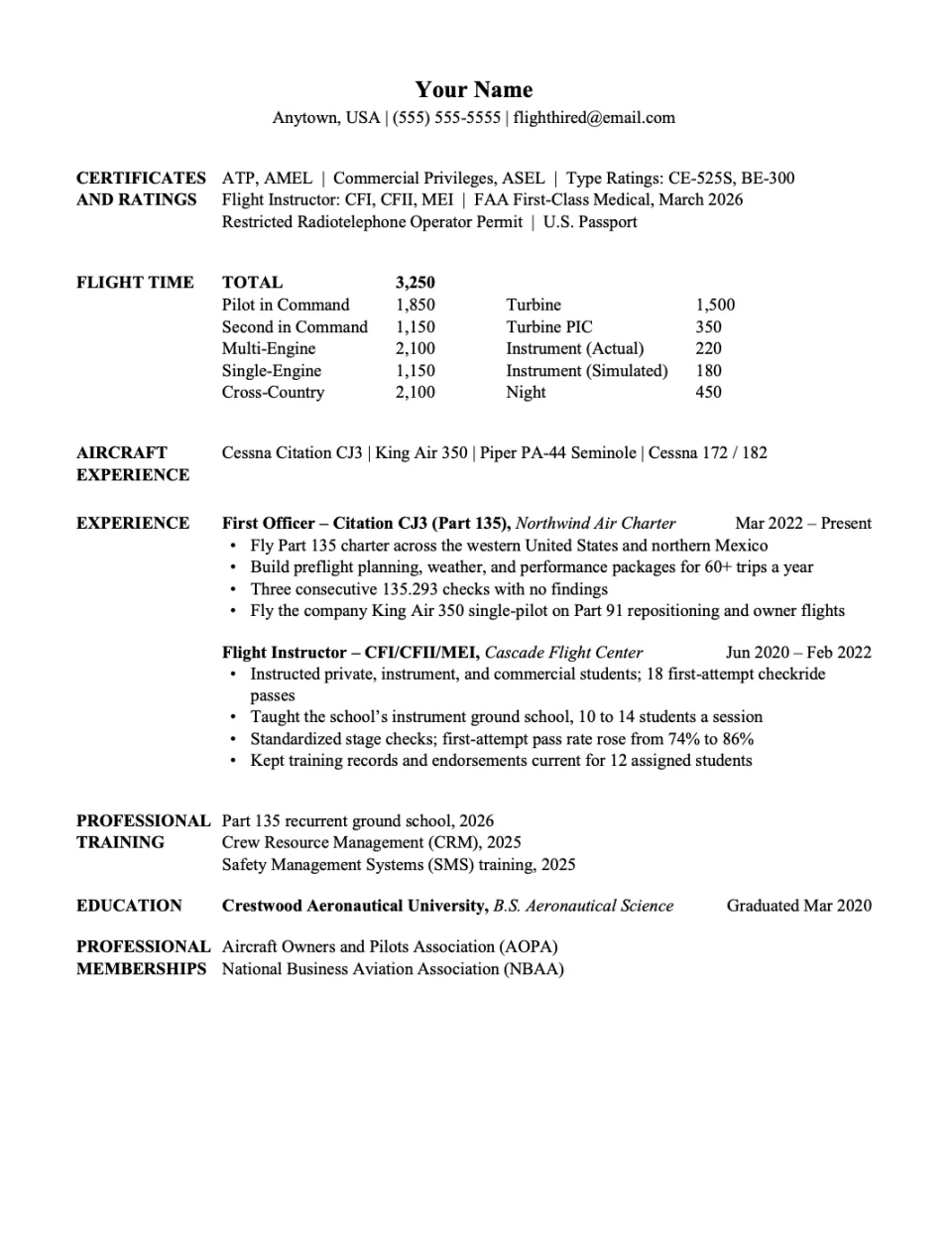
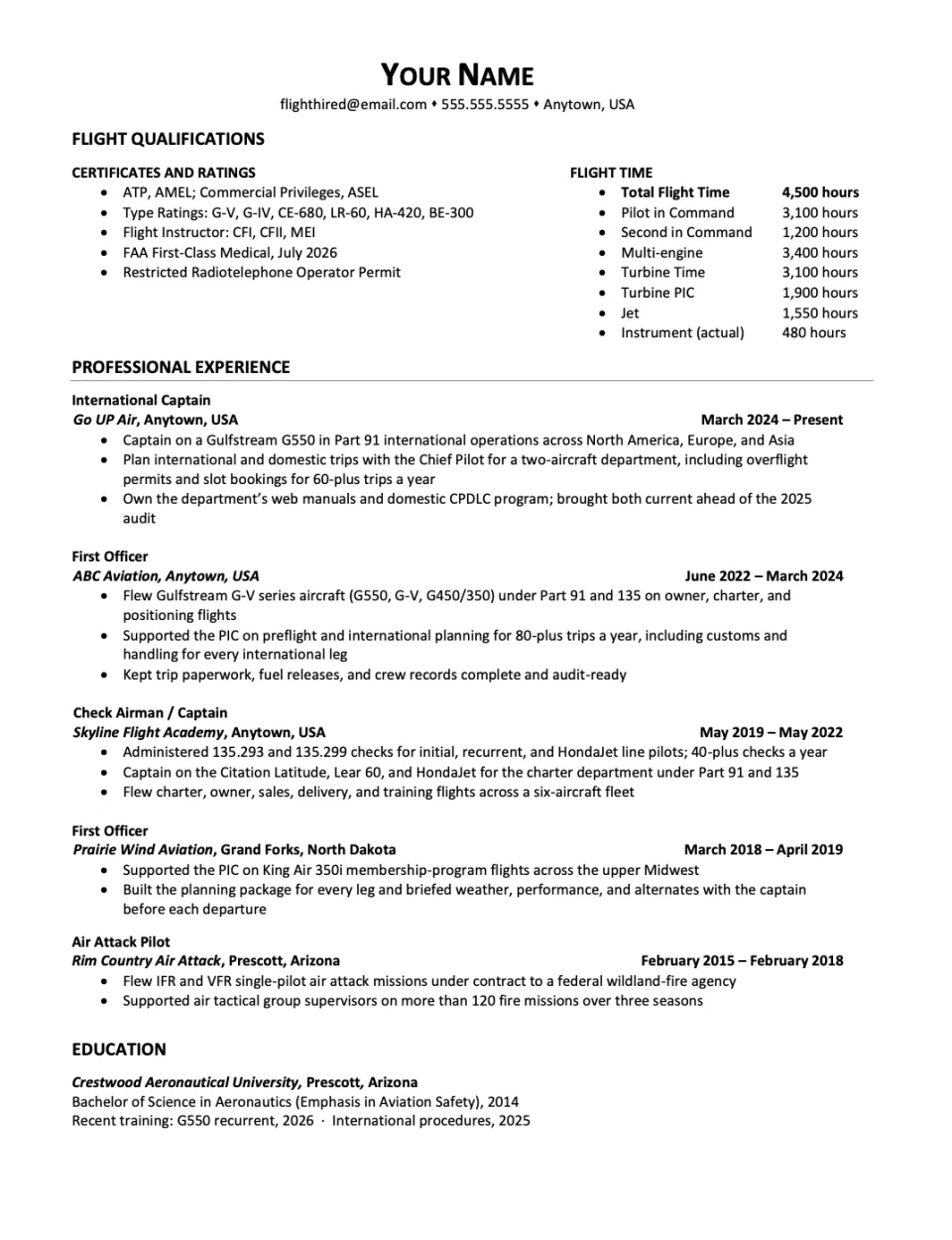
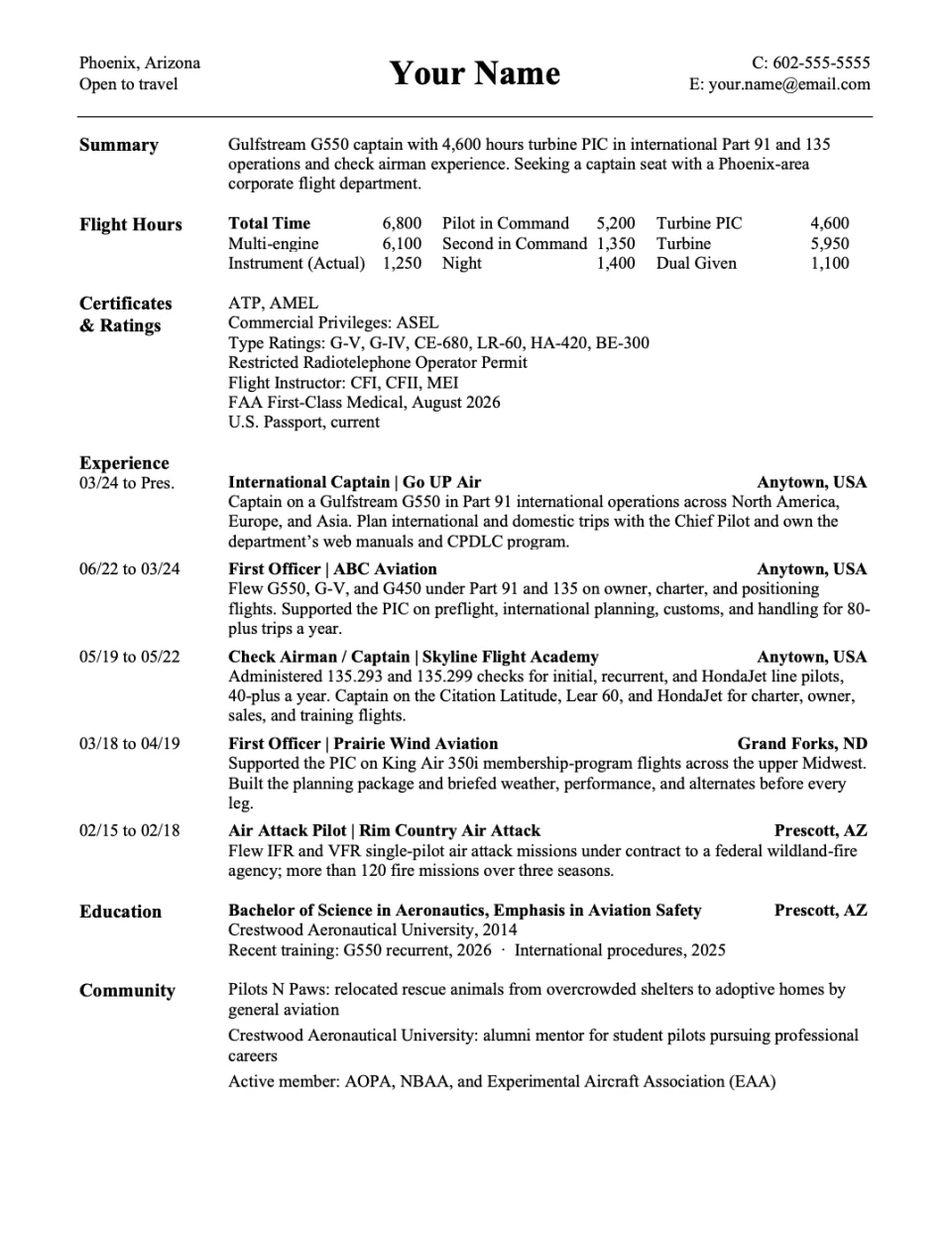
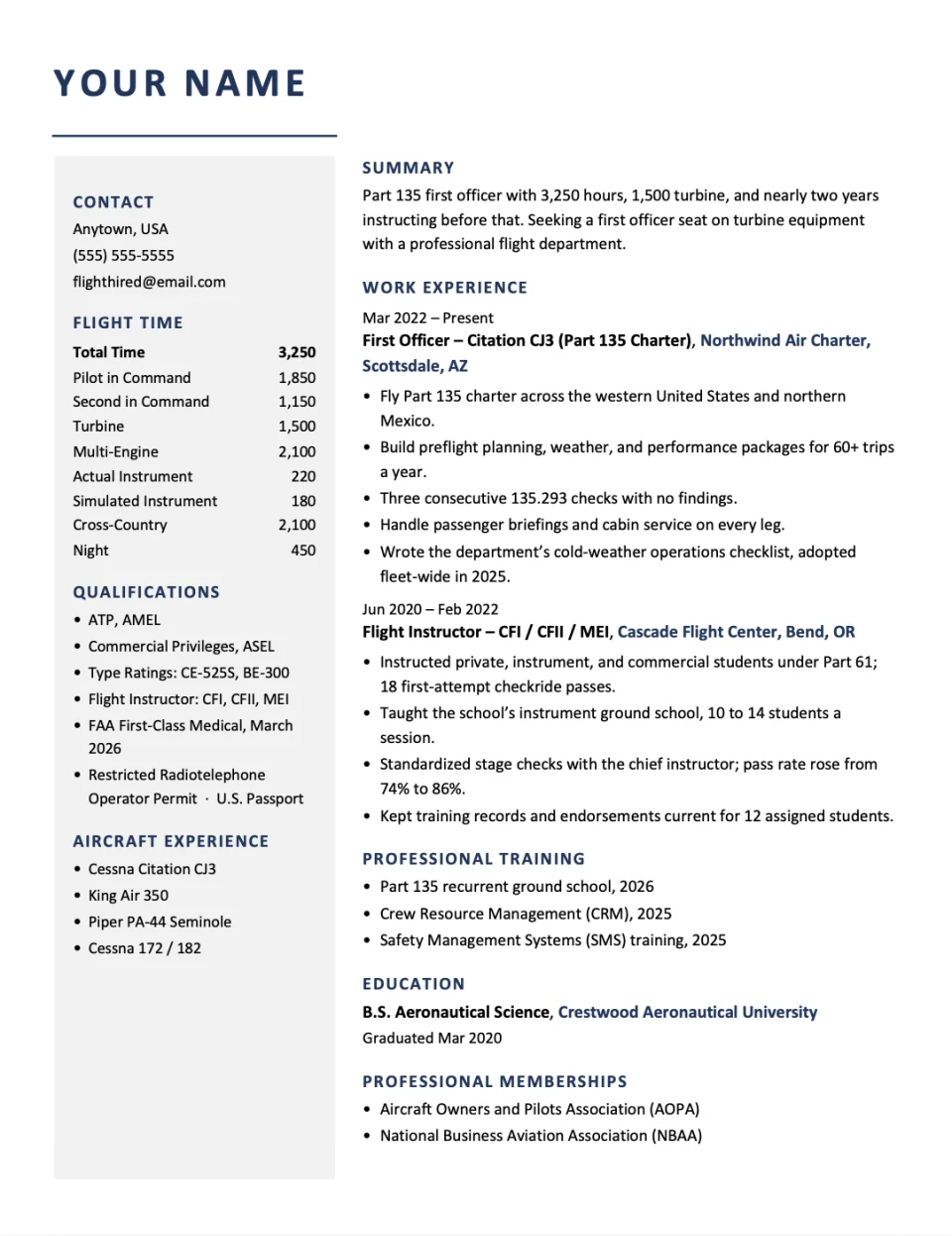
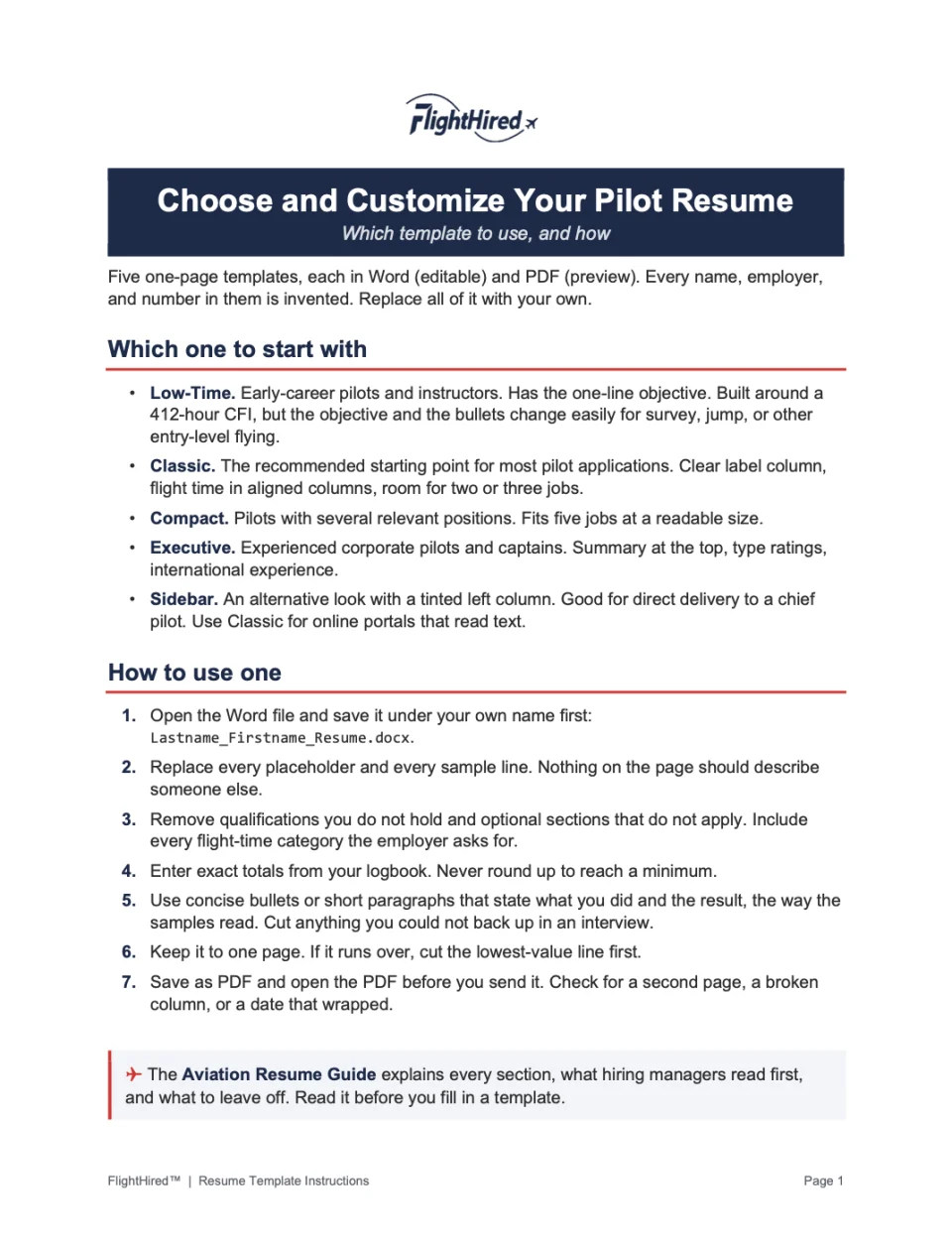
Then five one-page resume templates in Word, ready to edit. One built for early-career pilots, one for experienced captains, three in between. Instructions included for picking the right one and filling it in.


Ends with two complete sample resumes, annotated line by line, and a ten-point check to run before every send.

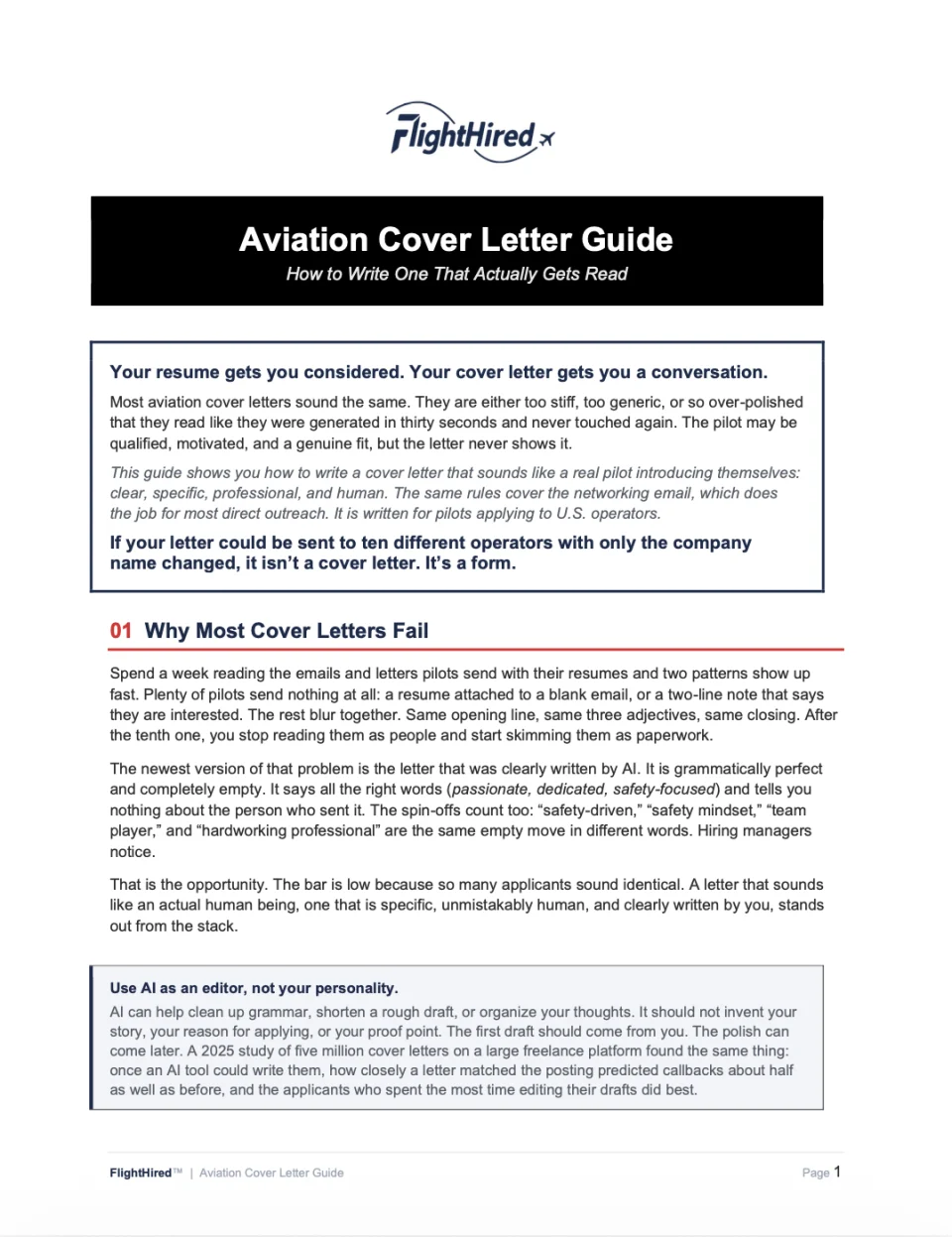
Aviation Cover Letter Guide

Your resume gets you considered. Your cover letter gets you a conversation.

Most aviation cover letters are interchangeable. Same opening, same three adjectives, same closing.


If your letter could go to ten operators with only the company name changed, it isn’t a cover letter.


This guide shows you how to write one that is. It covers the three questions every strong letter answers, how to match your tone to the operation you’re writing to, and why offering to fly for free works against you.


Covers both formats: the formal letter, and the networking email you send straight to a chief pilot. Three full examples. A follow-up template for when nobody replies.

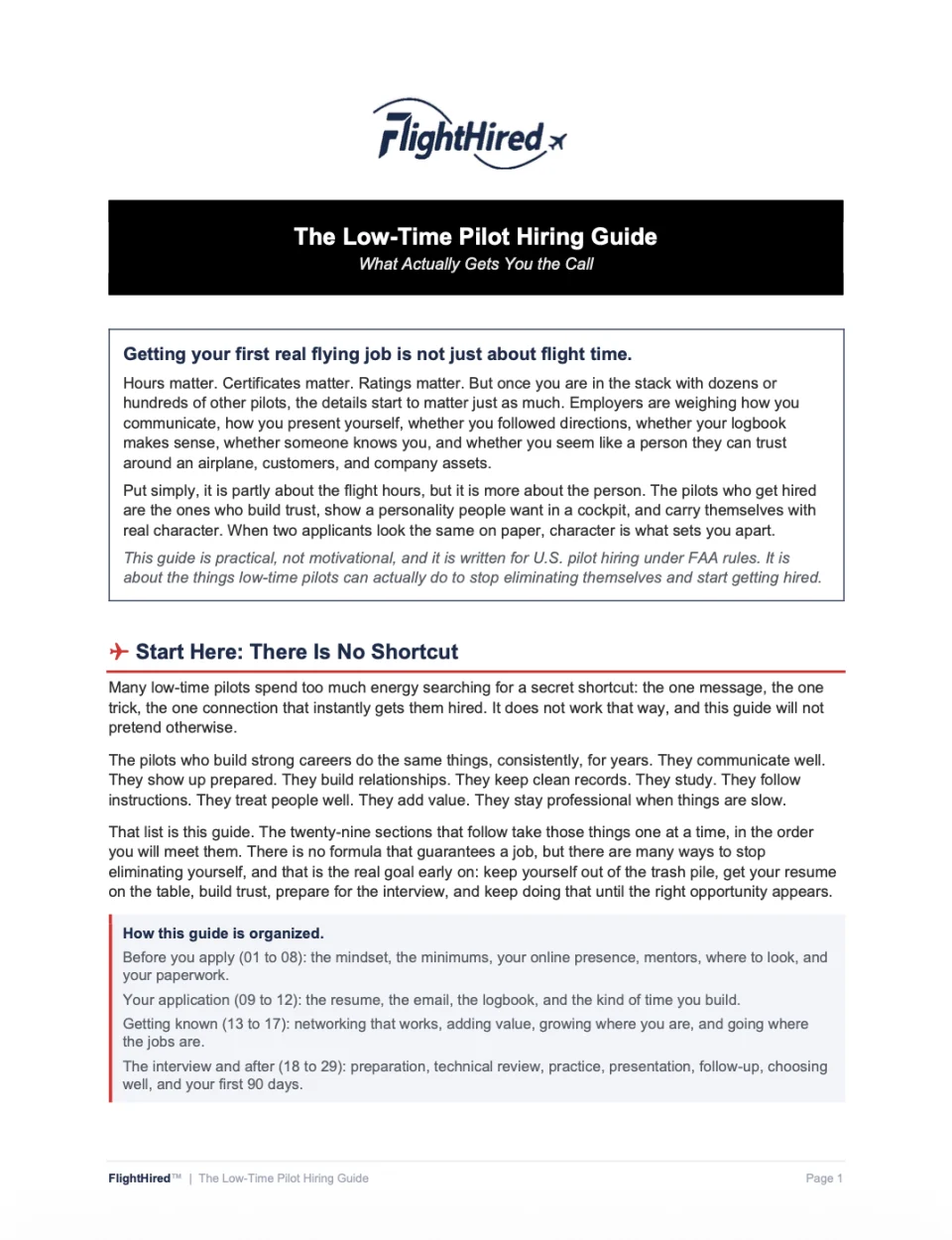
Low-Time Pilot Hiring Guide

What actually gets you the call, and what quietly gets you cut.

Hours get you into the stack. Everything else decides whether you get the call.


There is no shortcut, and this guide does not pretend otherwise. The pilots who build strong careers do the same things, consistently, for years. They communicate well. They show up prepared. They build relationships. They keep clean records. They follow instructions. They stay professional when things are slow.


That list is this guide. It covers where to actually look, how to research an operator before you apply, how to build flight time that is worth something rather than just more of it, what networking really is, and how to prepare for an interview before you have one.


This is our longest guide, and the one most likely to change how your next application lands. It ends with a full job-readiness checklist.
Frequently Asked Questions

Yes, and which one depends on the role. Most US positions require an FAA Commercial Pilot Certificate or an Airline Transport Pilot (ATP) certificate, and many also call for specific ratings or a type rating. International roles follow their own authority, such as an EASA or Transport Canada CPL or ATPL.


Every listing states its own requirements. Turn on My Eligibility and each job will tell you whether you qualify before you apply.

Start with a one-page resume that puts your certificates and flight time where a hiring manager looks first, with hours that match your logbook exactly. Tailor it to each posting using the operator’s own wording, and send a cover letter that says something specific about their operation instead of repeating your resume.


Our free Aviation Resume Guide, Cover Letter Guide and Low-Time Pilot Hiring Guide cover all of it, along with five resume templates you can edit.

We list roles at every stage, from flight instructor and first officer seats through captain and training positions. Turn on My Eligibility and every job tells you whether you qualify before you spend time on the application, so you can see what’s realistic right now and what’s a reach.

Not always. Some operators pay for the type rating once you’re hired, others want a current one before you apply. Each listing states which, and My Eligibility flags it against your profile so you know where you stand before you start an application.

New roles are added every day. Set up job alerts so the ones matching your certificates and hours come to you. Expect fewer postings on weekends and holidays, when most operators aren’t publishing.

We never charge an application fee. Creating an account is free, and a free account lets you apply to every curated job on the board, plus use all of our guides, templates, articles, and networking events.


Some roles are marked Pro Access. For $18.99 a month that unlocks those listings, The Black Book directory of more than 10,000 aviation operators, and Salary and Hiring Trends.